
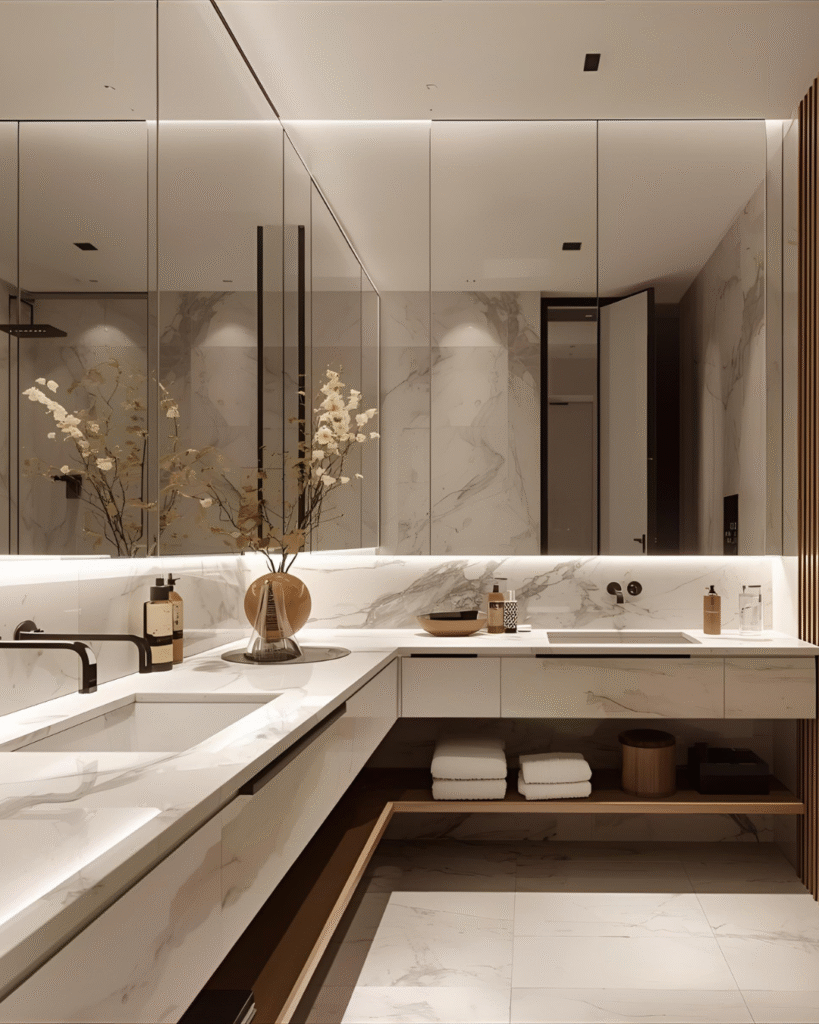
How Long Does a Home Renovation Take in Crawley
The timeline question tends to arrive fairly late in the planning process for most renovation projects. By the time a homeowner is ready to commit, they have usually spent considerable time thinking about what the renovation will look like and what it will cost — but considerably less time thinking about how long they will be living through it. When the answer turns out to be longer than expected, the frustration is real and largely avoidable.
Crawley’s housing stock is shaped by the town’s new town development history. The majority of its residential areas were built as part of a planned expansion from the late 1940s through to the 1970s — the neighbourhoods of Gossops Green, Bewbush, Ifield, Broadfield and Furnace Green were developed in phases, each with its own construction era and characteristics. Pockets of older housing exist in Crawley’s original village core and in the surrounding settlements of Pound Hill, Worth and Three Bridges. Newer developments have continued to expand the town’s boundaries through the 1990s and 2000s. Each era presents different renovation challenges and different programme lengths.
This post sets out realistic timelines for the main types of home renovation in Crawley, explains what each stage involves, and covers the factors that most commonly affect how long a project takes from first day on site to handover.
Timeline by Renovation Type
Single Room Renovation — Kitchen or Bathroom
A kitchen or bathroom renovation is the most common single-room project across Crawley’s residential stock. For a standard kitchen renovation — strip-out of the existing kitchen, any structural alterations to open up the space, first fix plumbing and electrics, fitting, tiling and decorating — the on-site programme typically runs two to four weeks depending on scope.
A bathroom renovation follows a similar structure — strip-out, first fix, waterproofing, tiling, second fix and finishing — and typically takes one to two weeks on site for a standard family bathroom. Where the kitchen or bathroom involves layout changes and significant plumbing rerouting, the programme sits at the longer end of those ranges.
Partial Renovation — Two to Three Rooms
A partial renovation covering two or three rooms — typically a kitchen, bathroom and one other space — involves more sequencing of trades and more coordination between the different stages. The kitchen and bathroom cannot always run simultaneously as they share plumber and electrician resource. First fix work in both rooms needs to be complete before plastering begins in either.
For a partial renovation of this scope in a standard Crawley semi-detached property, allow four to eight weeks on site. The range reflects how much structural alteration is involved, how involved the services update is, and whether any rooms are being reconfigured as well as refurbished.
Full Whole-House Renovation — Occupied Property
A full renovation of an occupied property — working through the house room by room while the family continues to live in it — is the most complex renovation programme to manage. The sequence needs to be planned carefully to ensure the household always has access to a kitchen, at least one bathroom, and sleeping accommodation. This constrains how the work can be programmed and typically extends the overall timeline compared with an equivalent renovation carried out on an empty property.
For a typical three or four-bedroom Crawley semi or detached house, a full renovation carried out on an occupied property typically takes twelve to twenty weeks on site from start to completion. The wider range reflects the scope variation between a property that needs primarily cosmetic updating and one that requires structural alterations, a full rewire, new heating system and reconfigured internal layout.
Full Whole-House Renovation — Empty Property
Renovating a vacant property — a recently purchased house that is empty before the new owner moves in, or a rental property being refurbished between tenancies — is consistently faster than the equivalent renovation carried out around an occupied household. Trades can work across the whole building simultaneously rather than in sequenced rooms. First fix across all areas can be completed before plastering begins anywhere. Decisions are taken and acted on more quickly without the daily management required when a family is living on site.
For a standard three or four-bedroom property in Crawley, a full renovation on a vacant house typically runs eight to fourteen weeks on site. Getting the renovation done before moving in — rather than during and after — is almost always the more efficient approach where the timing can be made to work.
Structural Renovation with Extension
Where a renovation includes a new extension alongside the internal work, the programme is longer and more phased. The extension shell needs to be watertight before internal fit-out can begin in the new space — and the internal renovation of the existing house is usually sequenced to run alongside the extension build rather than before or after it.
For a Crawley semi with a single storey rear extension and a full internal renovation, allow eighteen to thirty weeks from start on site to completion. The range is wide because the extension size, the scale of the internal works, and whether any significant structural alterations are involved all affect the total programme significantly.
The Pre-Build Phase — Where Time Is Lost
The on-site programme is only part of the overall timeline. The period between deciding to proceed and a builder arriving on site is where most renovation projects lose more time than expected — and where better preparation can have the most impact.
Planning Permission
Most internal renovations do not require planning permission. However, where the work includes a new extension, a loft conversion, significant external changes, or any alteration to a property in a conservation area or listed building, a planning application may be needed. Crawley Borough Council’s standard determination period is eight weeks from a valid application. Preparing drawings, submitting the application and receiving a decision adds two to four months to the pre-build timeline for projects that require consent.
Worth noting — some of the newer housing developments on Crawley’s edges, particularly in parts of the Manor Royal corridor and around the town’s more recent expansion areas, were built with planning conditions that remove or restrict permitted development rights. If your property is less than 25 years old it is worth confirming your permitted development status before assuming no application is needed.
Building Regulations
Building regulations apply to the majority of significant renovation work — structural alterations, electrical work, plumbing alterations, extensions and loft conversions all require sign-off. A competent builder will manage this as part of the project, but it does involve inspections at key stages that need to be booked and attended. Missed inspections cause delays. A builder who has an established working relationship with local building control — and understands Crawley Borough Council’s inspection process — manages this more smoothly than one who is less familiar with the local system.
Structural Engineering
Any project involving the removal of a load-bearing wall, a new structural opening, or a two-storey addition requires structural calculations from a structural engineer. These typically take two to four weeks to produce and need to be in place before the relevant building control stages can be passed. Commissioning a structural engineer at the same time as the planning application — rather than waiting until planning is approved — avoids the gap that otherwise occurs between consent and start on site.
Party Wall Agreements
Crawley’s new town housing stock is predominantly semi-detached and terraced — which means structural work affecting shared walls triggers the Party Wall etc. Act 1996. Notice must be served on the affected neighbour at least two months before work starts. Most neighbours consent straightforwardly, but the notice period is a legal requirement regardless. Serving notice as early as possible — as soon as the design is confirmed — is the most effective way to keep the pre-build timeline on track.
What Affects the On-Site Programme
Condition of the Existing Property
Crawley’s new town housing was built rapidly and at scale, which gives it a broadly consistent construction profile — cavity wall construction, concrete ground floors in many properties, trussed rafter roofs from the 1960s onwards. This consistency makes the housing relatively predictable to work on. The surprises that occasionally emerge when opening up walls or lifting floors in Victorian or Edwardian properties are less common in Crawley’s post-war stock.
That said, properties that have been substantially modified over the decades — non-standard additions, previous building work of variable quality, accumulated maintenance decisions — can reveal issues that were not visible at the quoting stage. A thorough builder will identify as many of these as possible during the survey process and flag them honestly before a programme is agreed.
Trade Sequencing and Availability
A renovation involves multiple trades working in a defined sequence — structural carpenter, plumber first fix, electrician first fix, plasterer, tiler, plumber second fix, electrician second fix, decorator. Each trade’s availability affects when the next can start. A builder with established working relationships with a consistent team of reliable subcontractors manages this sequencing far more effectively than one assembling trades on the open market mid-project. The difference in programme reliability between the two approaches is significant.
Material Lead Times
Kitchens, bathrooms, windows and doors, structural steel and bespoke joinery all have lead times that need to be factored into the programme. A kitchen ordered two weeks before the first fix stage is due causes a gap in the programme that could have been avoided. Materials need to be specified, ordered and delivery dates confirmed before the build programme is agreed — not partway through the project.
Weather
External structural work — groundwork, brickwork, roofing — is weather-dependent. For renovation projects that involve external elements, a weather contingency is a sensible addition to the programme. West Sussex winters are generally mild, but sustained wet weather in autumn and early winter does affect external trades. Internal renovation work is unaffected by weather and can run continuously regardless of conditions outside.
A Realistic End-to-End Timeline for Crawley Renovations
Bringing the pre-build and on-site phases together:
- Single room renovation, no planning needed: four to eight weeks total
- Partial renovation, two to three rooms: eight to fourteen weeks total
- Full renovation, empty property: fourteen to twenty-two weeks total
- Full renovation, occupied property: eighteen to twenty-eight weeks total
- Full renovation with extension, planning required: seven to twelve months total
These are realistic middle-of-the-range figures. A well-prepared project with clear decisions, materials ordered ahead of time, and a builder managing a consistent team will come in at the shorter end. Planning delays, party wall complications or unexpected structural issues will push towards the longer end.
If you are planning a renovation in Crawley, Horsham, East Grinstead, Horley, Burgess Hill or anywhere across West Sussex, we are happy to come out and talk through your project. We will give you a clear programme alongside your quote — based on what your property actually needs rather than a generic estimate. Get in touch to arrange a visit.